Archive for the ‘Gear’ Category

Many bands that play mostly in small to medium sized clubs will have YouTube or blog posts of their music. Often the videos are fine but the audio will be poor. Most computer video programs (think QuickTime, IMovie, etc.) will allow you to strip audio and insert a good recording of your music to sync with your video. Although a good two-track stereo recording can be an improvement, a multi-track recording gives you many more options which, if mixed correctly, can provide a first-rate, natural (not over hyped) listening experience to go with the video.

There are a few things that have helped me get a better-quality multi-track recording over the years. I’ll share some of these below. Then, I’ll give an example of the kind of recording I’m talking about by providing an example of a recording of Louisville band, Palo Verde.

  1. Use the right microphones. Some singers want to use their own microphones. It is important to check ahead of time to see what these microphones are. While some will work well, others will produce significant mixing issues. The same is true for drum mics, etc. Be sure to double check! Super or hyper cardioid mics are best because they work to eliminate noise from other instruments and especially floor monitors (see #2 and #3 below). Remember that when you’re trying to get a natural live sound you don’t need to put a microphone on every drum unless the band normally does so for the house mix. A single overhead (Omni?) microphone, kick, and snare mic will be plenty for many bands and less intrusive.
  2. Tweak monitor placement. While in-ear monitors permit the best recordings, most bands still use floor monitors. These should be placed well behind the microphone’s sound field. This is usually not difficult with singers. It is most difficult when a drummer uses a floor monitor, and it faces upward toward the overhead microphones. This means that the monitor mix will intrude on the drum’s overhead mix and render the overheads virtually useless. I usually bring along a spot monitor that I can place near the drummer, facing away from the overhead microphones.
  3. Control monitor mixes if possible. If the band is in a space with walls on either side and a wall in back, it will help if the front of house mixing engineer can run individual monitor mixes to each musician on stage, providing only the minimum of what they need. Full house monitor mixes at high volume can bleed into all of the stage microphones and wind up competing with your overall mix in a lot of ways (especially by creating out-of- phase issues) so keeping them as modest and targeted as possible will help later down the line. If band members are used to in-ear monitors this is best, of course!
  4. See if you can position musicians with the vocal stereo field in mind. If a band has three-part harmonies and those singers all stand at the front of the stage, it can help if these singers are not bunched up on one side. You will likely want to mix them to left and right, so have them stand on stage left/right if possible. This is helpful also because of the drum-bleed that comes through on the vocal mics. When mixing, the stereo field for the drums can be disoriented or out of phase if you are mixing a singer to the opposite side of the mix from where they stood on stage. Most musicians will honor this request, knowing its only for one night, if it is a huge change.
  5. Don’t fret the room microphone. If you use a room microphone for small to medium size club gigs, you’ll only use it for applause and room noise before and after songs. Otherwise, you’ll hear table conversations, etc. in the mix.
  6. Assess (and use) direct inputs for acoustic instruments. Most artists use direct inputs from pickups for guitars, mandolins, harmonicas, etc. these days. Some are excellent. Others are not so good. Use them no matter what the quality. Why? Because they are what the band “sounds like” and your job is to get that sound. That said, in some cases, you might want to stick a directional mic in front of an instrument, just to provide the option later of improving the sound. And remember, a good sounding direct input eliminates microphone bleed!
  7. The more you can control the better. In order to have maximum control over the quality of recording I prefer getting a direct feed into my own preamps and converters. Although many affordable mixers will now do multitrack recordings (Midas Mr18, Mackie Onyx, etc.) I prefer to use better quality preamps and digital to analog converters. For that I use a passive stage box that is a splitter, with one cable running to the bands mixer and the other running directly into my preamps and converters. This allows the band’s engineer to do his/her thing unimpeded while I do mine. When using a passive splitter, it is a good idea to carry along a few inline phantom power supplies and several good DI boxes to help with any ground lift issues. If you have the money and want to be sure you have the tools to get a good isolated sound and avoid compatibility issues with the house mixer you can avoid a passive splitter and get a few transformer isolated splitters such as the ART S8 and the cables to get from the front of house to the splitters and to your recording rig. I like my passive splitter because it has the cables built in and is easier to set up and haul. My basic converters and preamps are the Focusrite Clarett + series. I love the clarity and detail of the converters and the preamps sound great for just about everything. If I need other preamps I can bring them along.
  8. Mix to reproduce the live sound! The number one rule for mixing comes down to avoiding PD (plugin disease). When you have good tracks, it is tempting to add lots of effects (reverbs, delays, compression, etc.) that were NOT in use live. I see my job as reproducing a true to life recording that mirrors what the audience was actually hearing. When someone who attended the gig hears the recording as the audio for a YouTube they can say, “Wow, that’s just how the band actually sounded!”  

I recently had a chance to record Louisville’s Palo Verde at an outdoor venue called Bud’s Tavern. The recording was not made for video purposes, so live video is not available here. Here’s an audio track from that event, however, to provide a feel for the kind straight-forward enhanced “live sound” I’m talking about. You’ll want to listen on headphones or good speakers to appreciate the difference between this sound and a simple iPhone or two-track stereo recording.

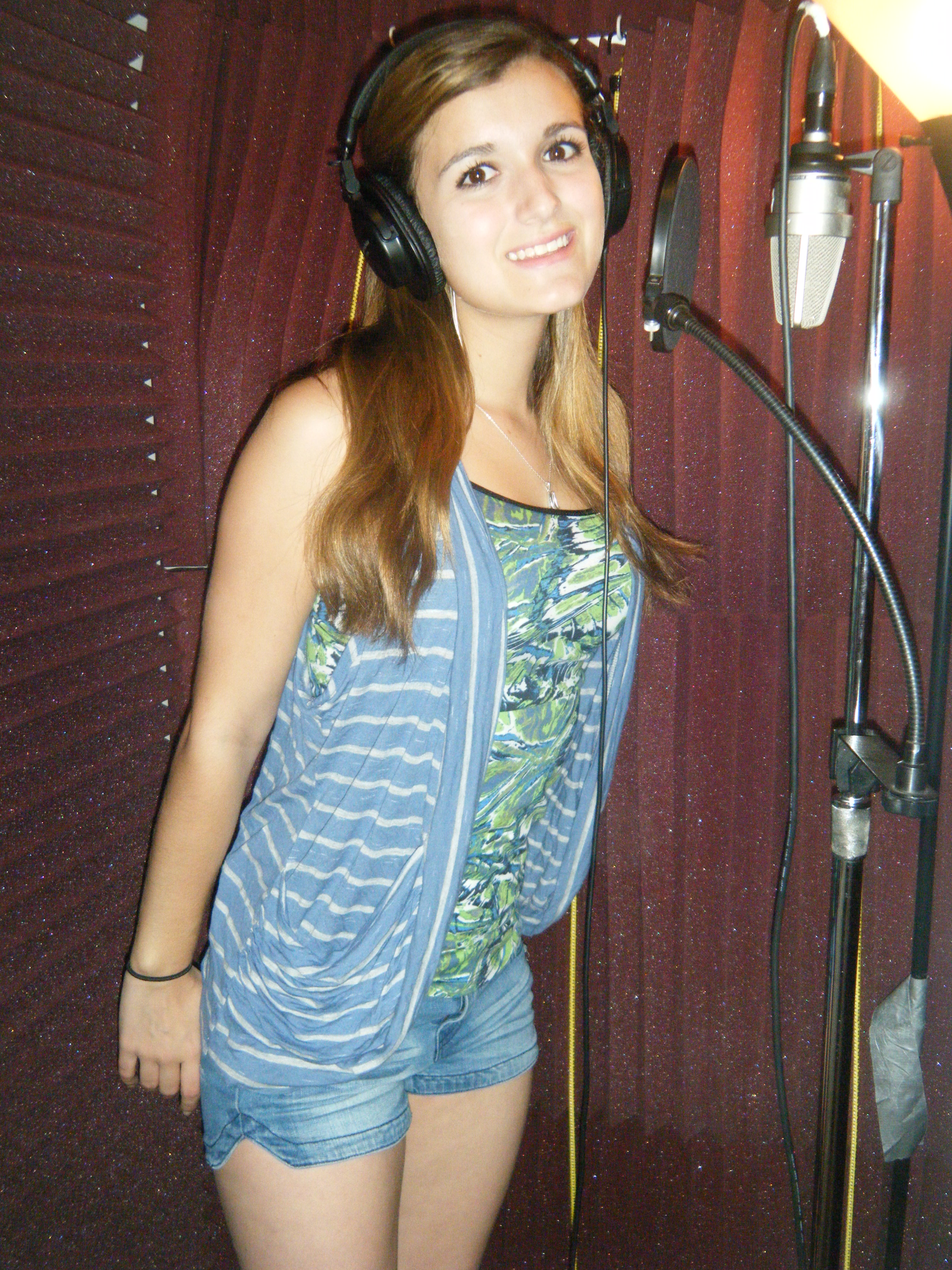
When we moved to Louisville from Nashville I went from a larger space to a smaller setup. Basically I now have a control room shared with a small isolation booth for vocals, acoustic instruments, etc. and a second room next door for tracking drums, and other loud instruments. There are also several small rooms and closets nearby where amplifiers can be isolated when groups want to track live. The setup is small, but still large enough to do live work if needed. The floor is on a slab, and the windows are treated with “Indows” that improve room isolation a lot.

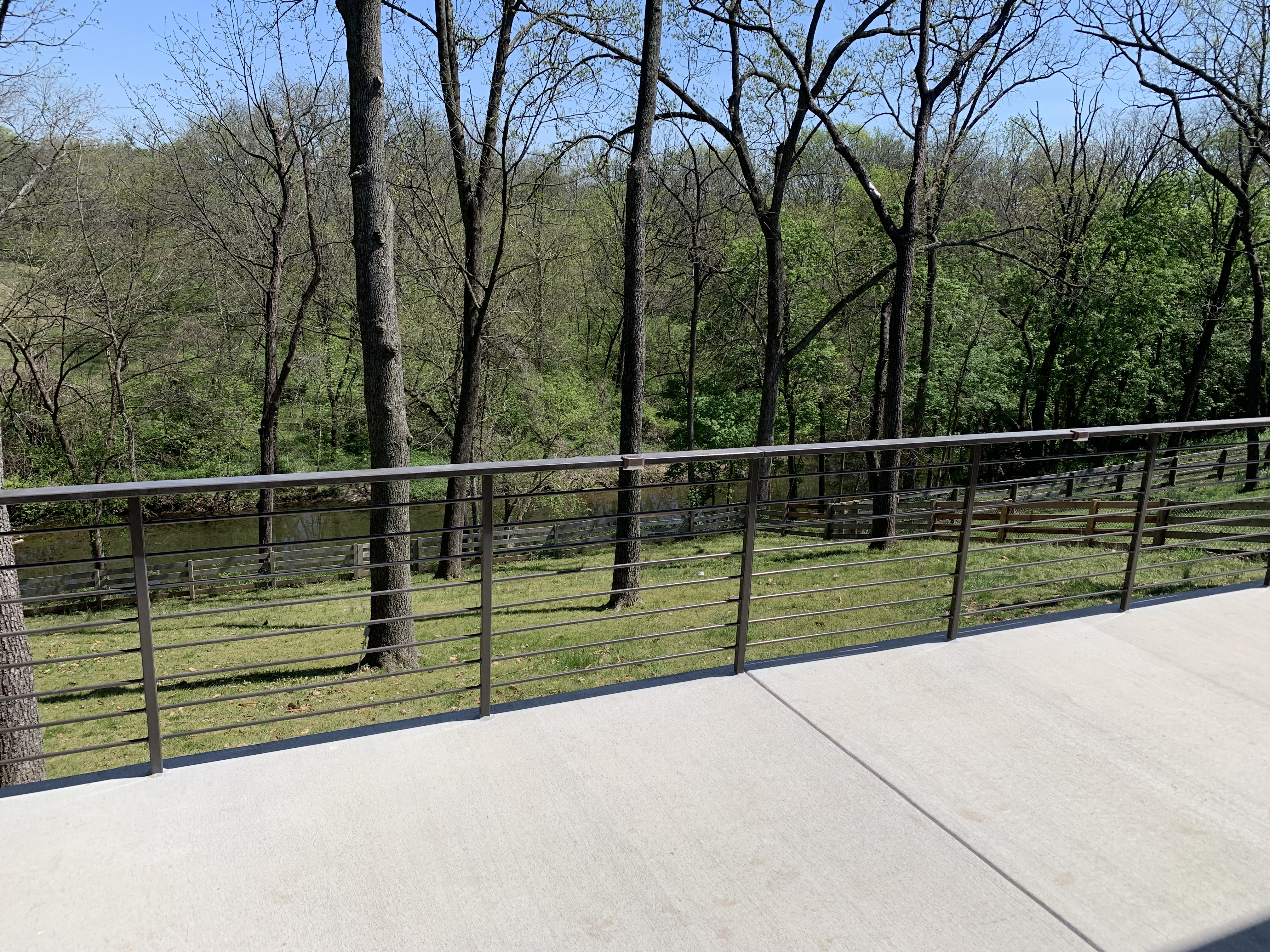
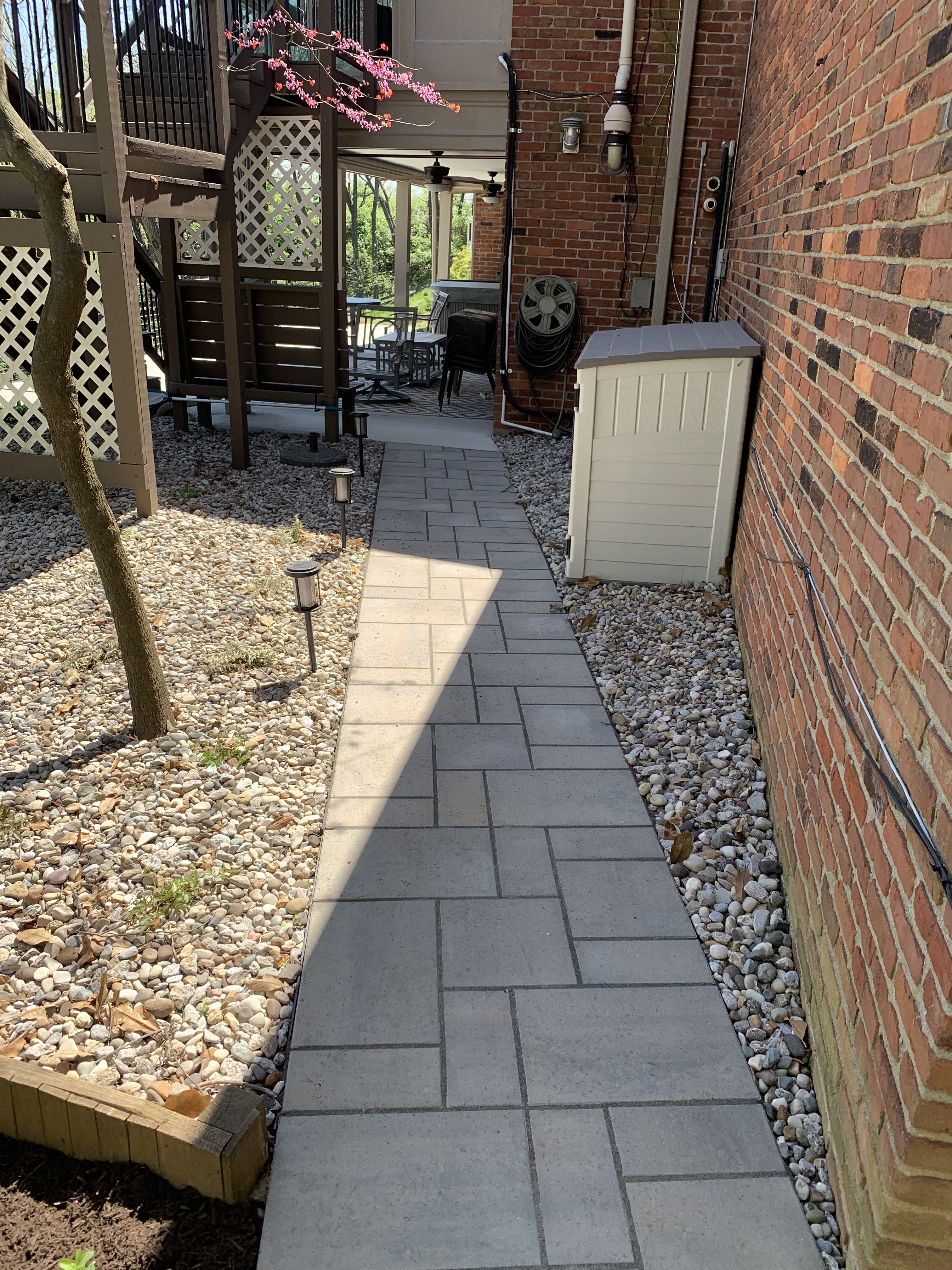
The studio is in a walkout basement in our home that overlooks Beargrass Creek. Access to the studio is via stone steps that run from the driveway alongside the house to a patio where musicians can gather or just hang out when not recording. The patio has a lovely view of the Creek

The door from the patio leads into a mi-size room where furniture can be easily moved around to set up drums, or other louder instruments for tracking. The door at the end of this room leads directly into the control room. The screen can be used as needed to see others in the control room and vice versa.

Here is a view of the control room / isolation booth taken from the large window on the creek side of the room. You can see that a large closet has been converted into a small iso-booth for vocals, etc.

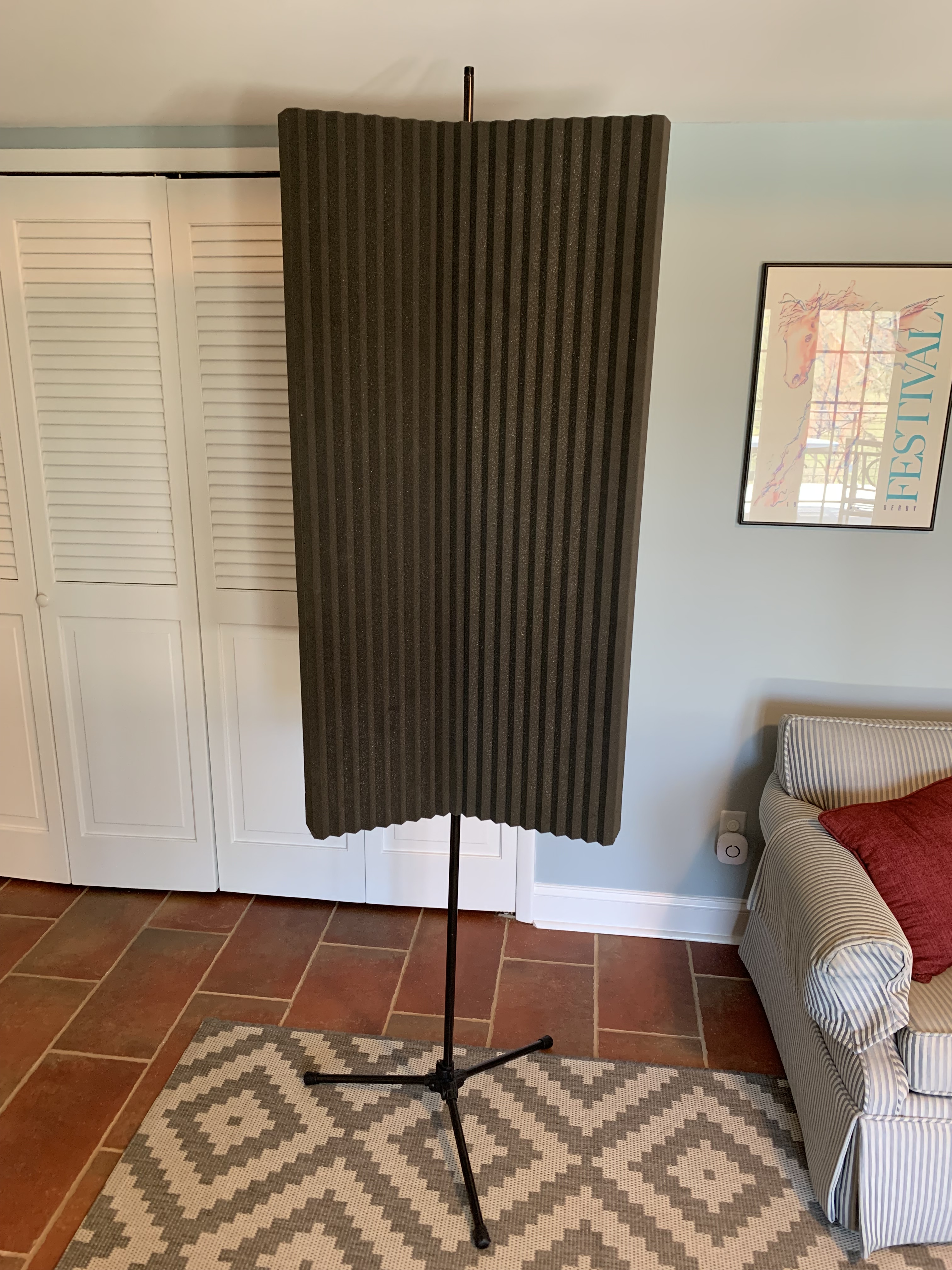
When isolation is needed, or corners need to be taken out of the recording, I now use a lot of these moveable Auralex gobos. They are amazing and work for just about every application possible.

These can be set up around or in the isolation booth if more or less isolation is needed, depending on the voice or instrument and the frequencies you want to enhance or squash.

From the isolation booth toward the window, here is the view, and the scene out the window. A great place to work on music!

All in all, it’s a great place to hang out and record music! I’ve settled in now and the vibe and the sounds are absolutely first rate.

So, living in Nashville is pretty amazing if you have a studio. Great musicians are available all the time, you can rent gear from several outlets for reasonable prices, and the there are many world-class techs available to repair, renovate, or modify your gear when needed. On that last score, I have been self-modifying several of my microphones, soldering better capsules and capacitors into my Rode N2 and into a Studio Projects B3 large diaphragm microphone.

After using my Miktek CV4 for a couple of years, and basically loving it for most things, I found that I kept trying to equalize a little high end “zing” – evidently due to the way the capsule interacts with the tube electronics in the body of the mic. I read a Tape Op magazine article about a microphone tech in Nashville named Shannon Rhoades, a guy who used to actually work at MikTek, who could do a killer modification on the CV4. After listening to some digital files of the results he is able to achieve, I bit the bullet (literally – this was not cheap) and decided to go for it. I emailed him and then packed up my CV4 and drove it over to his house. When I walked in, I shuffled past a dog, and a guy coming out of the back workroom with a microphone modified for Martina McBride (I believe it was her, or maybe it was Shania Twain), and met Shannon in the workroom Here’s a little video from YouTube of an interview with Shannon in that room (scroll to about 5:45).

The room was full of microphones, all being modified and personalized for various country luminaries, and Shannon asked me a few questions about what I was looking for in the mic. He got the drift, I left, and he went to work. Two weeks later I returned, paid him through PayPal, picked up the microphone and put it into action recording the Flat River Band (a post to come about that later).

After nearly a year with the modified microphone, using it on vocals, acoustic guitar, acoustic bass, and as a room mic, I have to say that it was worth every penny. What was a really, really good $1600.00 tube condenser mic, was now close to a world-class microphone – the kind you’d pay 8 to 10 grand to use. It has that huge, larger than life, “suck you in sound”, with a silky high end, tight and controlled midrange, full and flowery low end that is really nice to have on most vocals and featured instruments. It reminds me a lot of a Telefunken C12, and for about 1/3 of the price. Check Shannon out at https://www.facebook.com/Micrehab/

John Wiley Nelson (a.k.a. “The Rev”) is a folk and bluegrass songwriter residing in Provincetown, Massachusetts. He was the manager of WOMR, the local public broadcasting station there for some years, and still acts as DJ for a regular bluegrass show. He has recorded several CDs here at Jonymac Studio. Over the years, he has focused more and more attention on hiring the finest award-winning musicians for his CDs: Stuart Duncan on fiddle, Adam Steffey on mandolin, Randy Kohrs on resonator (dobro), Ron Stewart on banjo, and most recently Kenny Smith on acoustic rhythm and lead guitars. He also brings in Kenny and Amanda Smith to produce and perform his vocals. Due to the busy schedules of all of these musicians, it is impossible to get them all together at one time to record. We have to multi-track, working around their schedules. Here’s the process:

  • The Rev records a rough vocal and rhythm guitar track to click for all songs (I accompany him on guitar)
  • The Rev creates an arrangement sheet, identifying clearly who plays rhythm, fills, or leads during each song.
  • Kenny Smith comes in and records a rhythm track for all songs, replacing my scratch guitar track.
  • Kenny then records any lead acoustic guitar work needed
  • I record an acoustic bass track
  • This improved rough mix is sent to:
    • Adam Steffey who records his mandolin tracks at his preferred studio (sometimes Ron Stewart’s Sleepy Valley Barn in Paoli, Indiana)
    • Randy Kohrs who records his resonator tracks at his studio, Slack Key Studio in Nashville, TN)
    • Ron Stewart records his tracks at his studio: Sleepy Valley Barn in Paoli, Indiana
  • These artists send their stems to me digitally to put into the mix
  • The Rev comes back into the studio and records his final vocal tracks
  • Kenny and Amanda come in to do background harmony vocals
  • Stuart Duncan comes in to the studio here and records his fiddle tracks which provide the “glue” on the CD.
  • The Rev and I do a good early mix for each song
  • I finish the mixing and mastering

Because of the quality of musicianship, this process works wonderfully.

One final thing that really helped this new CD. I’ve been less than happy with the basic sound palette when recording and mixing acoustic music such as bluegrass “in the box” in Logic (Pro Tools is not better), so I added an instantiation of Slate Virtual Mix Channel’s Neve console emulation on each bus, and on the Mixbus, and it made an amazing difference. I strongly recommend this! The sound is warmer, rounder, more listenable. The CD is available on iTunes, Spotify, Napster, and YouTube. To hear the album on YouTube go here!

raalb01556550Credenda is a family band: see more here! Three siblings sing awesome harmonies, and the mother performs on keyboard. They came in and tracked a 6 song EP last summer, and we finished up the mixing in the fall. They released the project a few months ago. Kim Mclean produced the CD and brought in Andy Hull on drums, his son Evan Hull on electric guitar and bass, and Charlie Chamberlain on electric guitar and mandolin. The tracking sessions were very creative and spontaneous, and Mclean gave the artists a lot of room to experiment on each track. The results were beautiful. IMG_9103

We first tracked the drums, percussion, bass and rhythm guitars, along with a scratch vocal track. Because the energy between the siblings was so good on vocals, and I didn’t want to lose that, I recorded the vocals at the same time, after the rhythm and lead tracks were in place. That also gave me an opportunity to try out a couple of microphones I had recently hand-wired and modified, using parts from Micparts.com. I had done their Rode NT-2 modification with one of their RK-47 capsules on my old Rode NT-2 microphone, and their Studio Projects C3 modification on an old C3 I got on Ebay. I had also recently asked Shannon Rhodes do one of his incredible modifications on my MikTek CV-4 (more on that in another post soon!), and used that for the lead vocals. All three modifications took the vocals to a new level, and combined with the live three-part recording, the effect is great! Take a listen here!

My eyes aren’t what they used to be, and I’ve been wanting to get a couple of my favorite preamps (the ones with tiny knobs) up higher and closer where I can tweak them easily. I didn’t want to buy a new desk, so I needed an 8U short rack (12 inches deep only). Poking around online I came across Nice-Racks, which is basically a guy who makes gorgeous all-wood racks in a workshop at home. They are made to order, very reasonably priced, with lots of wood finish options. I chose maple to match my desk. I ordered through PayPal, and the rack arrived in about two weeks. It sits perfectly on my desk. Absolutely  beautiful. I recommend this guy without any reservations!

IMG_8819

All wood, 12in. deep 8U Rack from Nice-Racks

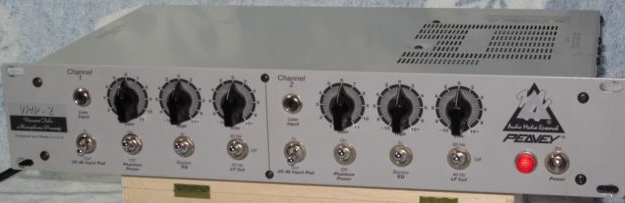
I usually record bass guitar both through a DI and through an amp. The DI provides a lot of the weight and lower harmonics, and the amp adds low-mid punch and definition to the sound. I’ve been relatively happy using standard DI boxes (Whirlwind, Radial, etc.) through my rather strange but wonderful Peavey VMP-2 tube preamp.

Screenshot 2017-11-10 19.40.50

That monster is one great bass preamp. And between the two, the sound has been good.

But then I stumbled on this thing:

Screenshot 2017-11-10 19.27.16

The A-Designs Audio, Reddi Tube Direct Box. Quite simply put, this is an indispensable piece of studio gear for those who want rich, multi-harmonic bass sounds from an electric bass guitar in the recording studio. I auditioned one for a project and immediately went and bought one. It was that good. The direct sound I was able to get from my Fender American Deluxe P-Bass was ridiculous! So ridiculous that it gave me enough low-mid punch, along with lower harmonics, when tracked through my Focusrite ISA 430 Producer Pack Channel Strip (with very little eq), that I decided to go straight into the board without the amp for the bass on Mundo Brew’s latest CD. The sound was great, and the mixing simple – the bass sat in the mix like a champ!

2015 was a lot of fun in the studio. Although several smaller projects were completed this year, these three CD projects were capstone events at Jonymac Studio. All three projects were utterly different, presenting unique challenges for tracking, recording, mixing, and mastering. Although Sherry Cothran’s is still in the final stages of mixing and mastering, I’m mentioning it here because it captured a wonderful space in the studio “process” this year.

therev15

First, John Nelson (aka “The Rev”) came down again from Provincetown, Massachusetts with another great batch of songs. Our workflow was much improved this time around, and he hired the usual suspects for a first rate album project: Stuart Duncan on fiddle, Adam Steffey on mandolin, Randy Kohrs on resonator and electric slide guitar, and he flew Mark Hill in from New Jersey for electric guitar tracks. Andy Hull provided his usual outstanding drum and percussion work. We switched vocal microphones on him, tracking him with the Miktek CV4, a nice tube condenser mic, and switched preamps to the Focusrite ISA 430 mkII. We both agreed that this combination really helped his voice pop out of the mix.  Take a listen: The Rev, We Are Family.

1890489_10207472072781421_5304223207308146052_o

During the summer, Sherry Cothran began tracking her new project, funded by the a Louisville Institute Pastoral Study Grant. A theologian, pastor, songwriter and performer, Sherry put all of her gifts together beautifully with a collection of songs that capture the essence of several religious traditions of “wisdom literature.” The idea behind this CD was to use acoustic instruments in a minimalist way to create a light, spacious soundscape for Sherry’s voice. I focused on using very transparent preamps during the tracking of percussion and acoustic bass. Jeff Roach tracked and sent in digital files for synth-cello and keyboard tracks, and Conni Ellisor also tracked acoustic piano tracks at her home studio and sent them along. Toughest to track was Sherry’s acoustic guitar. While a lovely instrument, is is very forward in the midrange, and doesn’t sport the kind of large, open sound that might have been nice for this CD. It takes some mixing work to get it right! Luis Espaillat was tremendous on the bass, and Andy Hull was amazing, as usual, on drums and percussion. One of the finest tracks on the CD is a track co-written with Peter Mayer (of Jimmy Buffett’s band) entitled “Still.” His guitar work on that cut is worth the price of this CD alone. The artwork is done – and beautiful. A first printing of the CD mixed by me was pressed for a CD party in November in Louisville. A final mixdown is underway, under the skillful hand of expert Dave Schober.

mundobrew

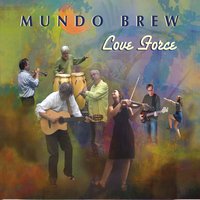
Perhaps the most fun of all was the experience tracking Mundo Brew, a Brazilian style Americana group from Louisville, KY. The songs written by band leader Chris Elwood are full of wonderful Latin American jazz chords and changes. The fun, in this case, was the “old school” dynamic of completely tracking the entire CD in a four-day “live-in” experience. Chris (vocals and guitar) and Brad Wigger (percussion) lived at the house. Chris’ daughters, Isabelle and Josephine, drove down the final two days and stayed at a nearby hotel, tracking backup vocals. Likewise, Doug Yeager drove down to track flute and saxophone, and Burns Stanfield flew in from Massachusetts for a day and a half to track keyboards and trumpet. What a whirlwind! We worked late hours, and caught a wonderful “live” groove that gives the whole CD a lot of energy and spontaneity. Most of the CD was tracked in my large room, with a few gobos placed strategically. We let the room sound work for us, and it provided a nice glue for the mix. Take a listen: Mundo Brew: Love Force

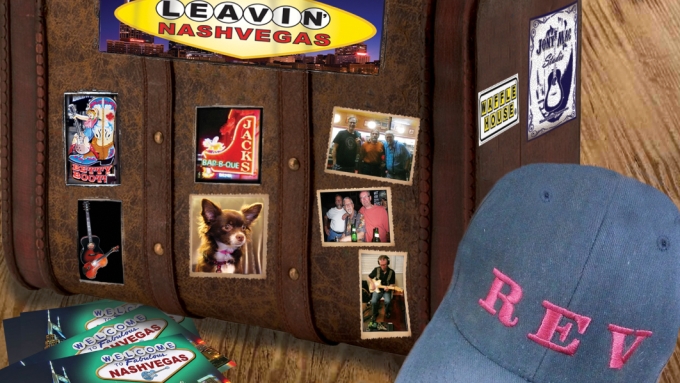
The Rev (John Nelson) came down again from Provincetown, MA to record in January (drums and rhythm tracks), and again in May (backing, fills, vocals), 2013. The result is his best CD yet, Leavin’ Nashvegas. Take a listen to the title cut, Leavin’ Nashvegas. Nice!

CD COVER: THE REV, LEAVIN’ NASHVEGAS

Several changes were made when recording this album. First, I completely revised the way that the bass guitar was recorded.

IMG_0049

IMG_0039

IMG_0050I used a smaller amp and cab, a Markbass 12′. I miked it using an EV RE320 (on instrument setting), and took a parallel line into my LA610 MKII so that I could add a line source into the mix. On the Markbass, I used a slightly midrange setting, and ran the RE320 into my Peavey VMP-2 tube preamp (I love this pre for bass!). This gave me lots of options at mix down, and helped us to get a really solid and punchy bass sound this time around without it being too sub-gassy (the Rev is not a fan of low end).

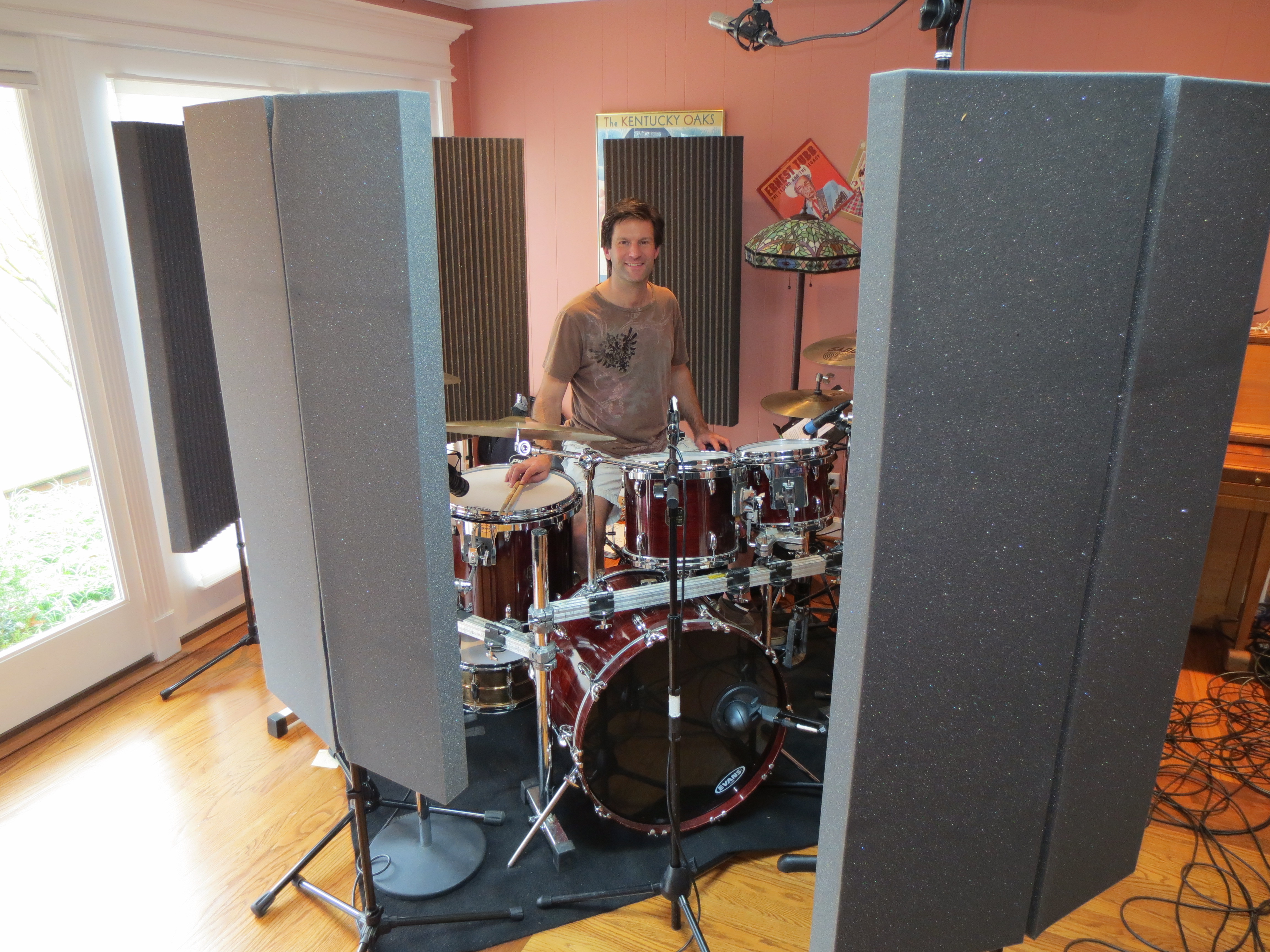
The next change was in how the drums were recorded. I decided to use Auralex Promax baffles around the drum kit to control the room a little more, and I used a Cascade X-15 ribbon mic for overhead mic, to try to tame some of the highs from the kit, due to the low ceiling in my room.

IMG_0008

IMG_0005

I put a pair of MikTek C5s on the cymbals, in case I needed it in the mix, and I miked the underbelly of the snare with a Beyerdynamic M422N (C) – a great mic for taming high end rattle from snares. This gave me great options at mix down this time around and vastly improved what I was able to do with the drums, given the range of different kinds of songs The Rev has on this CD. When recording drums, I only use compression on the Kick, so I used my True Precision rack of 8 preamps for pretty much everything else. You can really hear the different on songs such as Sausage and Fries.

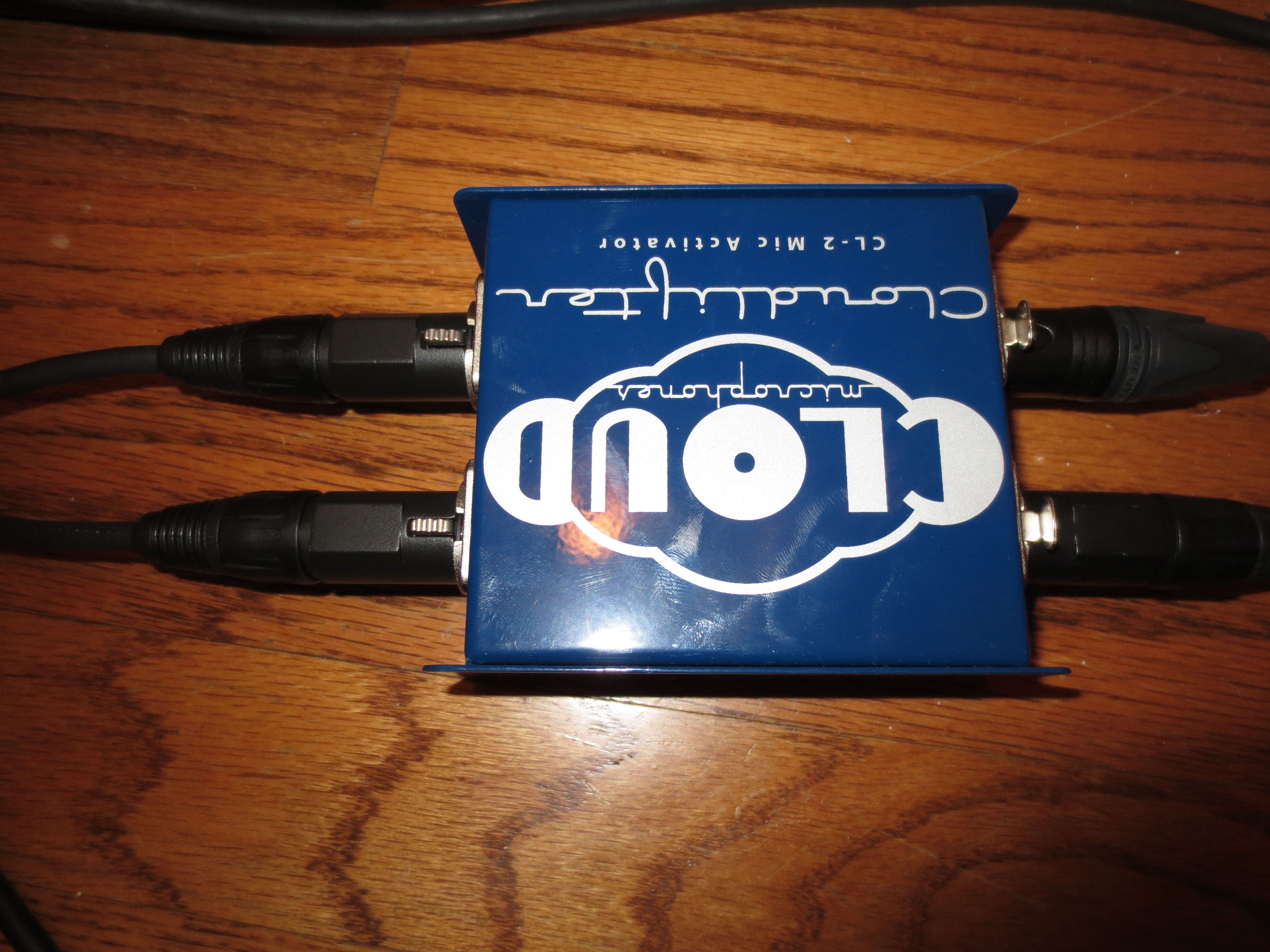
Oh, and in order to get the Cascade stereo ribbon mics “off the ground,” I used the greatest invention since peanut butter, the (stereo CL-2) Cloudlifter. Man, do I love this little toy!

IMG_0017IMG_0041

Another change this time around was getting Mark to use my ’72 Telecaster Thinline to track the lead guitar.

IMG_0389IMG_0397

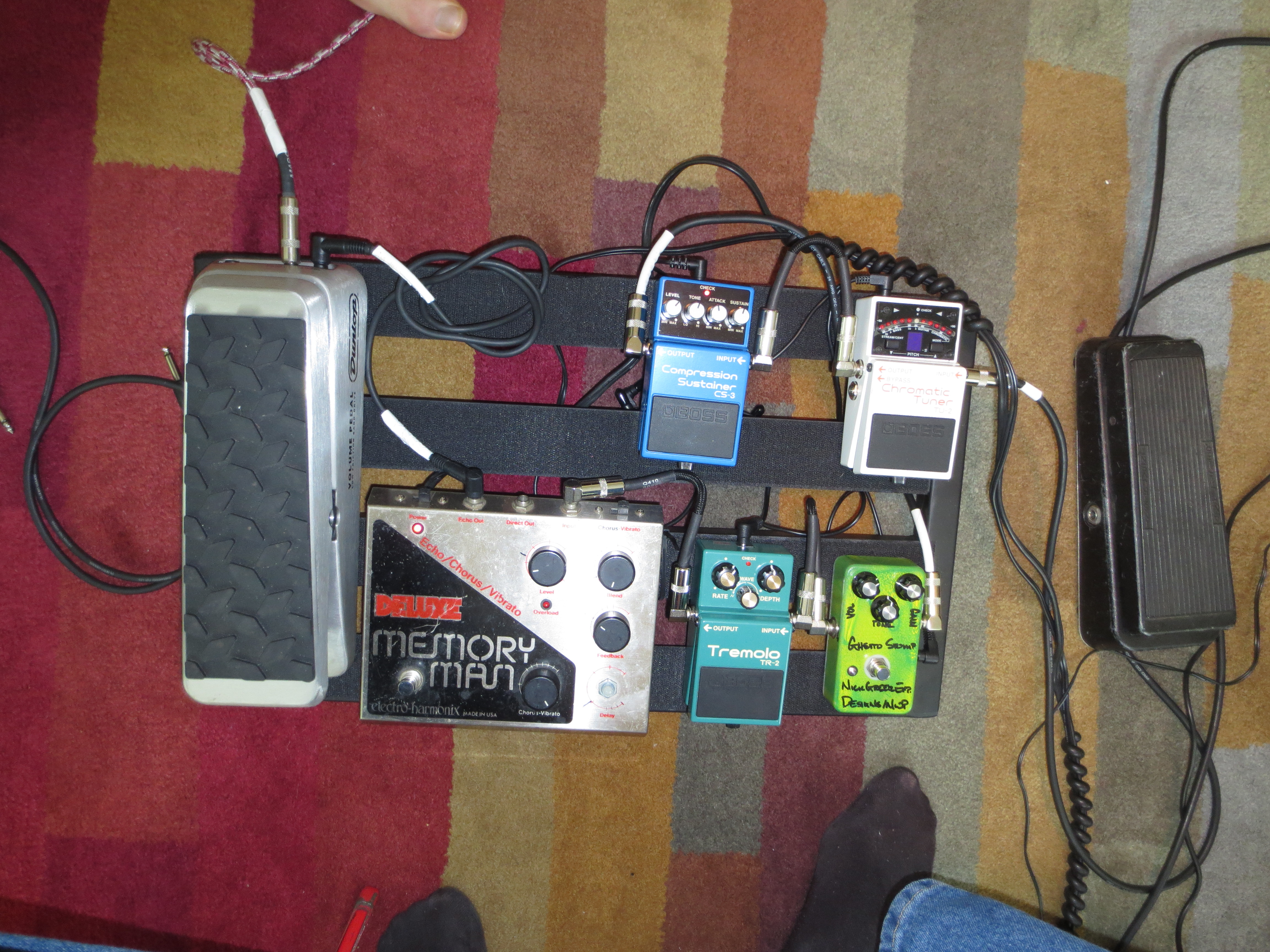
He also used my pedalboard, adding in his own compressor. The Nick Greer Ghetto Stomp was great for John’s blues tunes! And my buddy Dave Perkins loaned us his vintage Cry Baby for the reggae tune, Prayers for Luna.

IMG_0379

Finally, the Rev. wasn’t going to get the CD mastered independently, so I was going to have to do it. Knowing this from the start, I used the Slate Virtual Console on this project, spreading the NEVE board emulation across the entire project, including mix busses. I also spread the Slate Virtual Tape Machine across all channels as well. I also used Izotope 5 (on the mix buss – only for small tweaks), and the Slate Virtual Mastering Processor to the mastering buss for the CD. I can’t say enough about how much these products have added to all of my recordings. Truly inspired emulations of analog equipment!

All in all, the CD turned out great, and John seems very happy with the end product. Check out the music at his website!

John Wiley Nelson (a.k.a. “The Rev”) is a retired Presbyterian (PCUSA) minister who lives in Provincetown, MA. In his retirement, he is the manager of the local public radio station, WOMR. The Rev writes mostly folk and/or Americana songs. He likes to use acoustic instruments, but with electric bass and drums – locating his sound somewhere between bluegrass and country. Although a minister, his music is not religious – though, at times, it shows the sensibilities and sensitivities of a theologian and pastor. There is a lot of fun in his music which is loaded with irony, double-entendre, and reversals of plot.

The Rev. likes quality of instrumentation. When he comes to town, he hires the best. In this case, he hired Grammy award winner Randy Kohrs on dobro and pedal steel. Kohrs was Dolly Parton’s dobro player for years, and has played on more than 500 albums, ranging from those by such legends as Hank Thompson and Jerry Reed to current chart-toppers Little Big Town, Dierks Bentley, Sara Evans and The Wreckers.  Among his accolades for such work is a 2009 Academy of Country Music Award nomination in the Top Specialty Instrumentalist category. Randy owns and operates his own recording studio called Slack Key Recording Studio. We sent him scratch tracks and he recorded his tracks in his own studio.

ImageO

On fiddle, the Rev brought in Stuart Duncan. Stuart can be seen and heard with The Nashville Bluegrass Band, where he’s been a contributing member since 1985.  The band has won two Grammies, multiple IBMA & SPBMA awards. Duncan has played with Jerry Douglas, Bela Fleck, Yo Yo Ma, Alan Jackson, Chris Thile, Edgar Meyer, and many others. He is a complete professional. Because he tracked after the dobro and mandolin were finished, he provided fills that weave all of the other tracks together in a beautiful way. He showed remarkable sensitivity also. When tracking “Ordinary Day”, a song with a verse about the death of the Rev’s son, he re-recorded his lead, working to make it match the tenor and feeling of that part of the song. I used a single MikTek C5 on his fiddle and it worked great. I let him find the sweet spot, and the tracks turned out great.

Image

The Rev hired Grammy award winner Adam Steffey to record mandolin tracks. Steffey has played with many of the bluegrass greats, including playing for seven years with Alison Krauss and Union Station, working regularly with the Dan Tyminski Band, and now playing with the Boxcars. Adam lives several hours away and had a friend, Ron Fonzerelli, record his tracks and send them in. Ron used API pres and a stereo pair of Neumann KM84s to record Adam. The tracks turned out really well in the mix.

Image

I used no eq or compression on the dobro, mando, or fiddle tracks. I used the same stereo buss for all three instruments in order to get them pretty much into the same sonic space in the mix.

Plugin Settings

That buss had a tiny bit of Softube “Focusing Eq“, (to add tape saturation – I love Softube saturation), URS API modeled eq. (a really smooth, natural sounding eq.), a very small bit of URS 70’s compression, and a tiny bit of IK Multimedia CSR Room reverb on it. That’s all.

The Rev. likes to mix genres on his CDs, and on this CD he had two great blues tunes. He flew Mark Hill in from New Jersey to track the lead  guitar parts. Mark played with Herd of Blues for years, and really has a nice feel for blues. He brought his Fender Nashville Telecaster and we recorded him through my Fender Princeton, using a single Shure SM57. He used my Nick Greer “Ghetto Stomp” to add grit to the sound. The result was great.

Mark Hill

Andy Hull produced some masterful drum and percussion tracks. Andy has drummed for Ty Herndon, Jamie O’Neal, Collin Raye, Joey and Rory, Lee Greenwood, and the Evinrudes. I tracked him in the larger room in the studio and, instead of overhead miking cymbals individually and using a room mix, I used a stereo pair of AT4041s, which are brighter than my MikTek C5s,  up and back over the kit to get the kit reflecting off the walls of the room. This would give us the option of picking up as much of the ambient wood in that room as we could as a part of the kit.


On the Rev’s vocals, we used the TLM 103 through my UA LA610-MKII. I used a tiny bit of limiting on the way in, but no compression. With vocal tracks I usually use a 4-buss setup. Buss 1 is for a touch of reverb, buss 2 is for a tiny bit of delay, buss 3 is for vocal thickening, and buss 4 is for widening. I find that the Logic Stereo Delay works fine for delay, timed to 1/8 notes and used very modestly. Izotope Alloy’s vocal preset for “Intimate Parallel” vocals is a nice place to start when tweaking a vocal thickening track. Logic’s analog tape compression combined with Logic’s Stereo Spreader produce a nice, adjustable spread. The IK Multimedia “Vocal Late Reverb” setting provided a good amount of reverb ambience.

Vocal Plugins

The Rev invited his daughter, Molly, to track vocals on three of the CD’s songs. She had a lovely, soft voice, and her pitch was perfect. I used the TLM 103 on her voice and a similar 4-buss palette.

The Rev asked me to record the bass tracks. I used my Fender American Deluxe P-Bass. I went direct, through the LA 610MKII. I then added the IK Multimedia Ampeg SVX plugin, splitting the sound between the DI and an emulated SVT-4 Pro. On the two blues songs, I used the back pickup (a Fender Jazz Pickup), and a bit more compression on the way in, to get a more mid-rangy “honkin blues” sound.

He also asked me to record some of the rhythm guitar tracks. Mark Hill recorded some of these also. He prefers these to be in the mix, but not prominent. I used my MikTek C5 stereo pair in a ORTF arrangement for these tracks.

He also had me record the keyboard tracks. I used Logic’s “Yamaha Studio” piano for the piano tracks, and used my Nord Electro 2 for the organ tracks.

The CD turned out great. Check it out at CD BABY.