Archive for the ‘Tricks of the Trade’ Category

John Wiley Nelson (a.k.a. “The Rev”) is a retired Presbyterian (PCUSA) minister who lives in Provincetown, MA. In his retirement, he is the manager of the local public radio station, WOMR. The Rev writes mostly folk and/or Americana songs. He likes to use acoustic instruments, but with electric bass and drums – locating his sound somewhere between bluegrass and country. Although a minister, his music is not religious – though, at times, it shows the sensibilities and sensitivities of a theologian and pastor. There is a lot of fun in his music which is loaded with irony, double-entendre, and reversals of plot.

The Rev. likes quality of instrumentation. When he comes to town, he hires the best. In this case, he hired Grammy award winner Randy Kohrs on dobro and pedal steel. Kohrs was Dolly Parton’s dobro player for years, and has played on more than 500 albums, ranging from those by such legends as Hank Thompson and Jerry Reed to current chart-toppers Little Big Town, Dierks Bentley, Sara Evans and The Wreckers.  Among his accolades for such work is a 2009 Academy of Country Music Award nomination in the Top Specialty Instrumentalist category. Randy owns and operates his own recording studio called Slack Key Recording Studio. We sent him scratch tracks and he recorded his tracks in his own studio.

ImageO

On fiddle, the Rev brought in Stuart Duncan. Stuart can be seen and heard with The Nashville Bluegrass Band, where he’s been a contributing member since 1985.  The band has won two Grammies, multiple IBMA & SPBMA awards. Duncan has played with Jerry Douglas, Bela Fleck, Yo Yo Ma, Alan Jackson, Chris Thile, Edgar Meyer, and many others. He is a complete professional. Because he tracked after the dobro and mandolin were finished, he provided fills that weave all of the other tracks together in a beautiful way. He showed remarkable sensitivity also. When tracking “Ordinary Day”, a song with a verse about the death of the Rev’s son, he re-recorded his lead, working to make it match the tenor and feeling of that part of the song. I used a single MikTek C5 on his fiddle and it worked great. I let him find the sweet spot, and the tracks turned out great.

Image

The Rev hired Grammy award winner Adam Steffey to record mandolin tracks. Steffey has played with many of the bluegrass greats, including playing for seven years with Alison Krauss and Union Station, working regularly with the Dan Tyminski Band, and now playing with the Boxcars. Adam lives several hours away and had a friend, Ron Fonzerelli, record his tracks and send them in. Ron used API pres and a stereo pair of Neumann KM84s to record Adam. The tracks turned out really well in the mix.

Image

I used no eq or compression on the dobro, mando, or fiddle tracks. I used the same stereo buss for all three instruments in order to get them pretty much into the same sonic space in the mix.

Plugin Settings

That buss had a tiny bit of Softube “Focusing Eq“, (to add tape saturation – I love Softube saturation), URS API modeled eq. (a really smooth, natural sounding eq.), a very small bit of URS 70’s compression, and a tiny bit of IK Multimedia CSR Room reverb on it. That’s all.

The Rev. likes to mix genres on his CDs, and on this CD he had two great blues tunes. He flew Mark Hill in from New Jersey to track the lead  guitar parts. Mark played with Herd of Blues for years, and really has a nice feel for blues. He brought his Fender Nashville Telecaster and we recorded him through my Fender Princeton, using a single Shure SM57. He used my Nick Greer “Ghetto Stomp” to add grit to the sound. The result was great.

Mark Hill

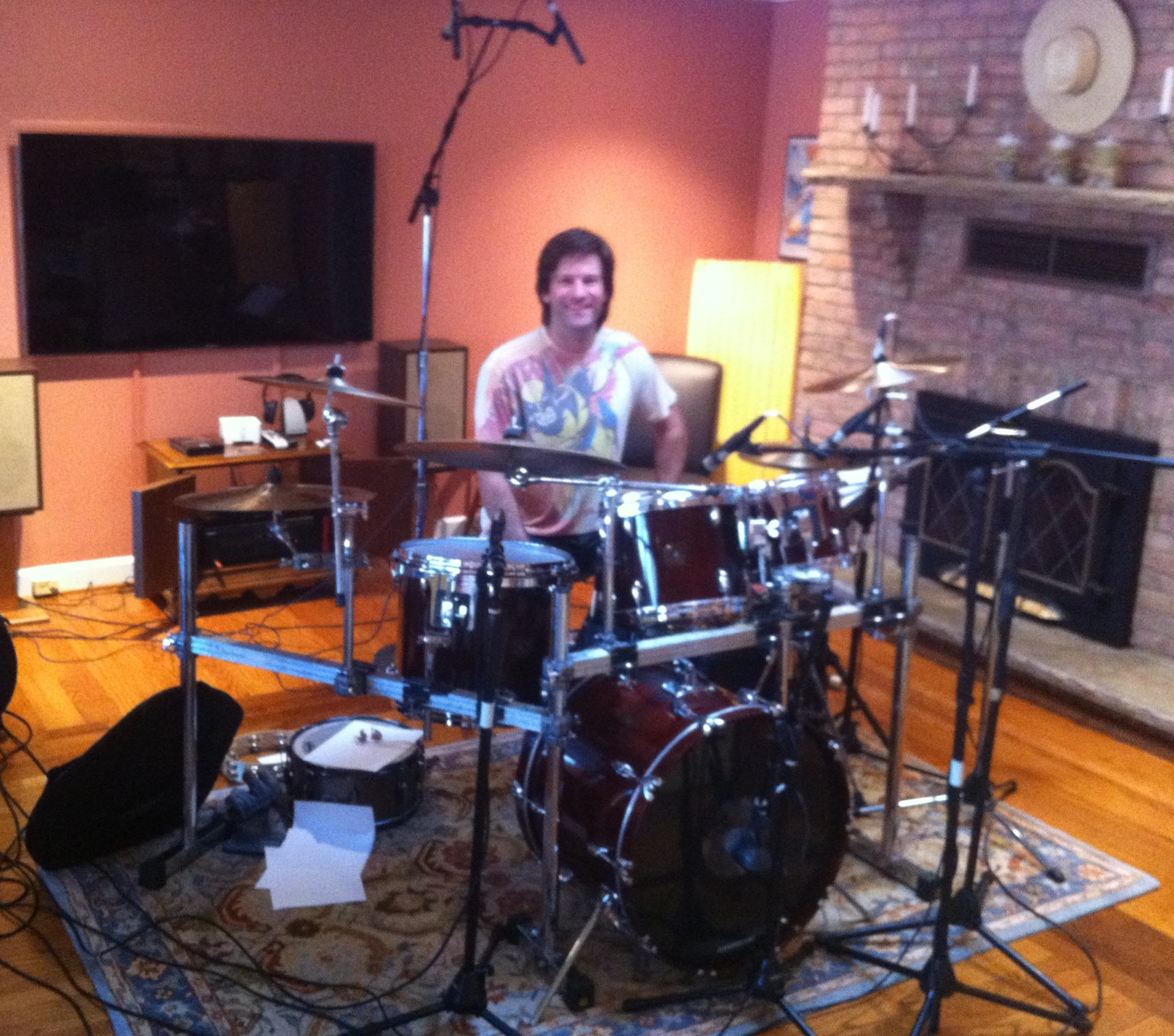
Andy Hull produced some masterful drum and percussion tracks. Andy has drummed for Ty Herndon, Jamie O’Neal, Collin Raye, Joey and Rory, Lee Greenwood, and the Evinrudes. I tracked him in the larger room in the studio and, instead of overhead miking cymbals individually and using a room mix, I used a stereo pair of AT4041s, which are brighter than my MikTek C5s,  up and back over the kit to get the kit reflecting off the walls of the room. This would give us the option of picking up as much of the ambient wood in that room as we could as a part of the kit.


On the Rev’s vocals, we used the TLM 103 through my UA LA610-MKII. I used a tiny bit of limiting on the way in, but no compression. With vocal tracks I usually use a 4-buss setup. Buss 1 is for a touch of reverb, buss 2 is for a tiny bit of delay, buss 3 is for vocal thickening, and buss 4 is for widening. I find that the Logic Stereo Delay works fine for delay, timed to 1/8 notes and used very modestly. Izotope Alloy’s vocal preset for “Intimate Parallel” vocals is a nice place to start when tweaking a vocal thickening track. Logic’s analog tape compression combined with Logic’s Stereo Spreader produce a nice, adjustable spread. The IK Multimedia “Vocal Late Reverb” setting provided a good amount of reverb ambience.

Vocal Plugins

The Rev invited his daughter, Molly, to track vocals on three of the CD’s songs. She had a lovely, soft voice, and her pitch was perfect. I used the TLM 103 on her voice and a similar 4-buss palette.
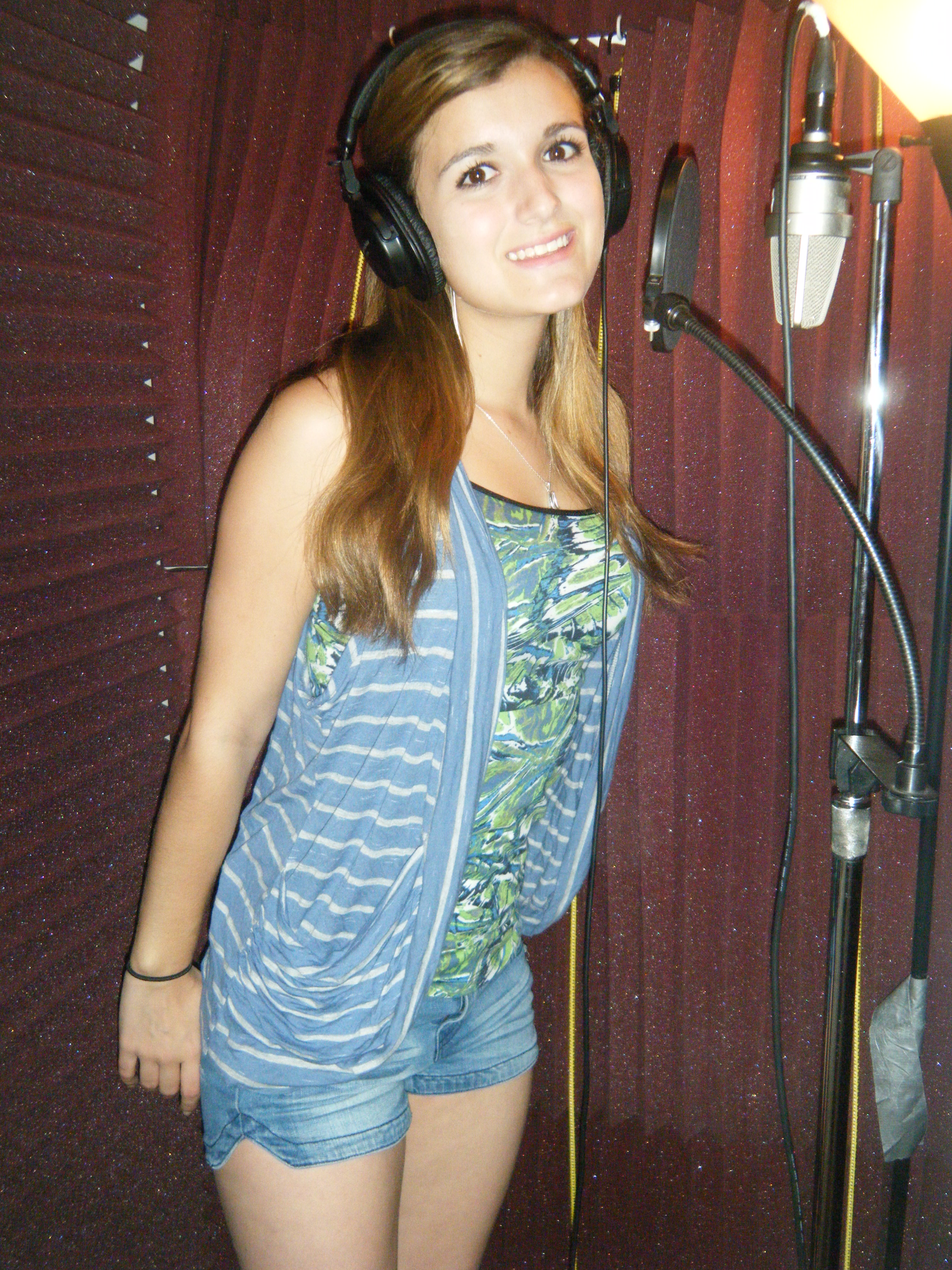
The Rev asked me to record the bass tracks. I used my Fender American Deluxe P-Bass. I went direct, through the LA 610MKII. I then added the IK Multimedia Ampeg SVX plugin, splitting the sound between the DI and an emulated SVT-4 Pro. On the two blues songs, I used the back pickup (a Fender Jazz Pickup), and a bit more compression on the way in, to get a more mid-rangy “honkin blues” sound.

He also asked me to record some of the rhythm guitar tracks. Mark Hill recorded some of these also. He prefers these to be in the mix, but not prominent. I used my MikTek C5 stereo pair in a ORTF arrangement for these tracks.

He also had me record the keyboard tracks. I used Logic’s “Yamaha Studio” piano for the piano tracks, and used my Nord Electro 2 for the organ tracks.

The CD turned out great. Check it out at CD BABY.

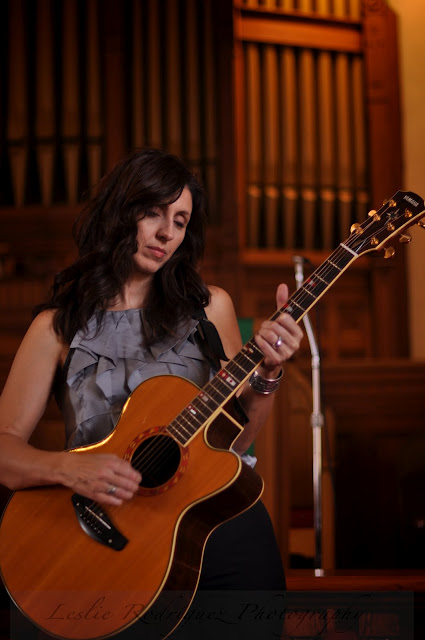
Ian Willey (AKA I.C. Will) flew in from New York City on Thursday. His primary goal was to track several songs in the vocal booth, and to have my daughter, Leslie, record several vocal hooks and background vocal parts.

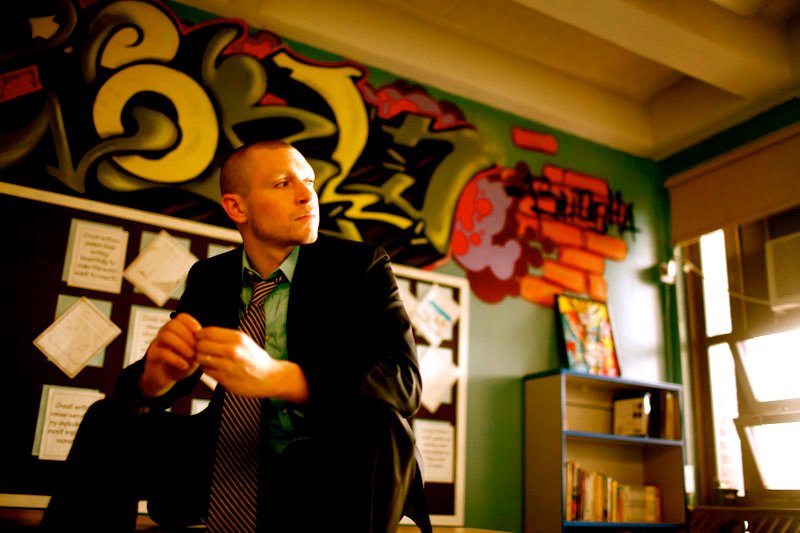
I.C. Will, July 2012 Session

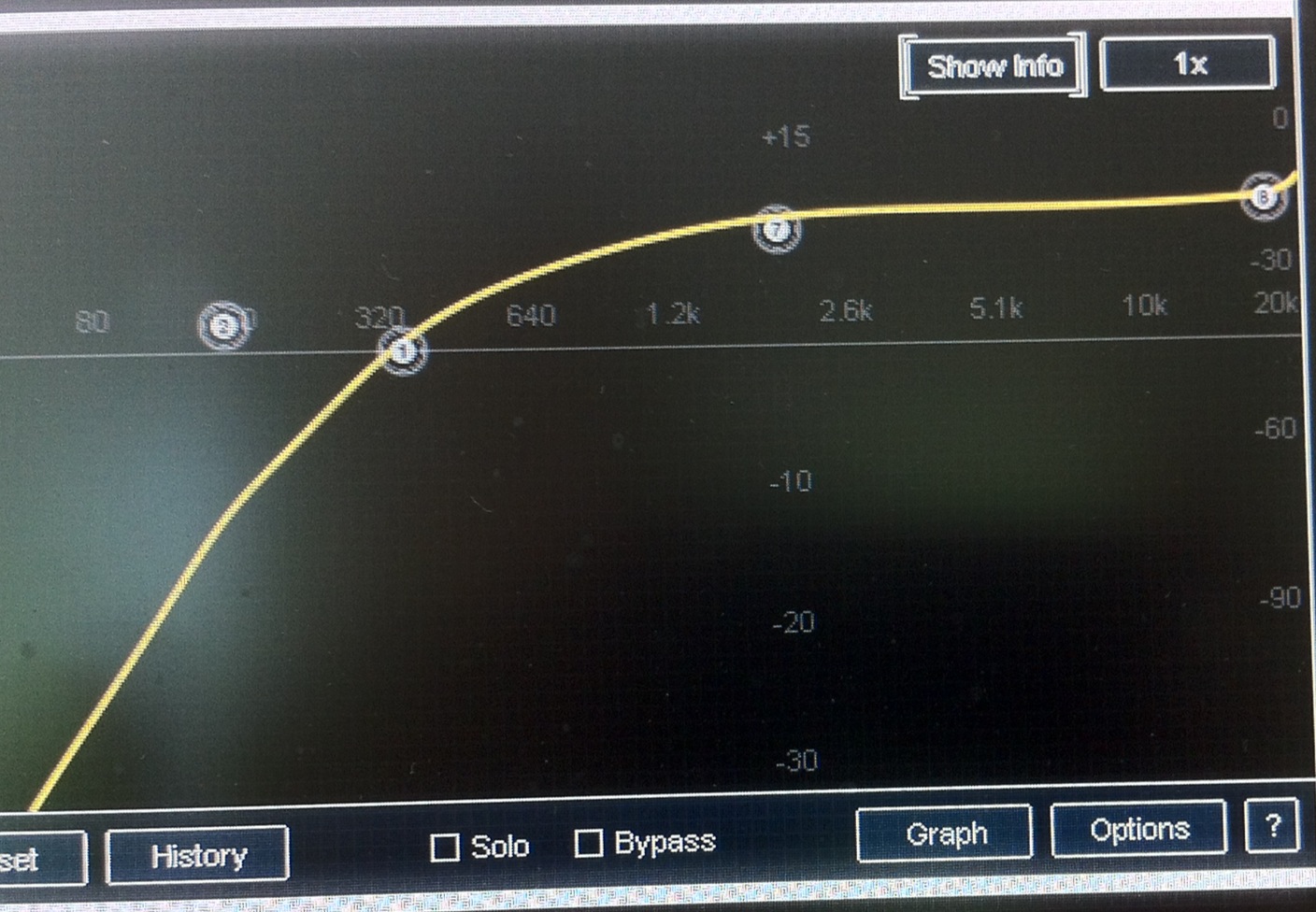
As I’ve noted before, Ian likes me to roll off most of the low end on his voice, so I pulled everything below 200 of during he recording stage, and pulled more off in Logic. Here’s the eq curve he likes! Whew! And you can hear it (audio clip linked below)!

He and Leslie spent a good bit of time discussing his lyrics (on his iPhone) and deciding on how he wanted the vocal hooks to feel.

He wanted Leslie to not only sing a few vocal hooks, but to also do some blues scat vocals behind his rapping during a couple of songs.

In the end, it SOUNDED GREAT to have her free-stylin’ on vocals while he rapped.

The CD is now about halfway tracked. I’ll keep you posted!

Sherry Cothran is a smart, multi-talented, profoundly creative woman. The former lead singer for the alt-Southern rock  band the Evinrudes, Sherry now is the pastor of West Nashville United Methodist Church.

I first met her in class at Vanderbilt Divinity School. She was beginning a journey that would end with her placing her poetic abilities as a lyricist, and her musical genius, into the service of giving voice to biblical women. By her third and final year in divinity school, she had written a complete set of incredible songs. I was lucky enough to be able to work with her in the studio,  bringing these songs to life. Through each song we hear something of Sherry’s own journey of faith, and what it means to be a woman haunted by the God of the Bible. The stories of Deborah, Hagar, the woman of Endor,  the “strange woman” of Proverbs 8, and others resonate with the lives of women today.

Sherry was able to rally the Evinrudes to track her songs in the studio. It was a real treat to work with this excellent group of musicians who are now playing with some of Nashville’s big name artists.

Andy Hull produced some masterful drum and percussion tracks. I tracked him in the larger room in the studio and, instead of overhead miking cymbals individually and using a room mix, I used a stereo pair of AT4041s, which are brighter than my MikTek C5s,  up and back over the kit to get the kit reflecting off the walls of the room. This would give us the option of picking up as much of the ambient wood in that room as we could as a part of the kit. Sherry liked this room sound, and liked the drums on the “bright” side. We used a lot of room ambience on the drum and percussion tracks.

Ethan Pilzer’s bass tracks are fluid and lyrical – creating beautiful counterpoints throughout the CD. He lugged his excellent preamp rig into the studio and I ran it direct into my Apogee converters. I didn’t want anything to get in the way of the sound he was getting. He also recorded his standup  bass tracks at home and mailed them in. I found that with a little tweaking, Izotope Alloy’s preset for acoustic bass was just the ticket for juicing those tracks with some presence and energy.

Brian Reed’s guitar work adds consistent “signature” hooks to nearly every song on the CD. We used an SM57 on his tweed amp, off axis, through my old Peavey VMP-2 tube amp to add a little grit and grain, and the sound was fantastic. Brian played identical parallel tracks, doubling himself perfectly on each song. This allowed us to create a huge soundstage with the electric guitar.

Jonathon Hamby’s keyboard tracks, especially on “In My Lover’s Arms” are sensitive and add sonic depth throughout the CD. He recorded these at home and mailed them in. In the mix, they needed only a little high-mid boost to cut through nicely.

Sherry invited Conni Ellisor in to track on violin, encouraging her to use Middle Eastern scales and tones. Conni was amazing. Her fiddle sounded best with a ribbon mic, and the Cascade Fathead worked wonders, keeping the highs from overpowering her sound. Conni was her own taskmaster, hard to satisfy, but in the end, her tracks make the CD (IMHO).

Toward the end of our tracking sessions, Sherry wanted a few small percussion tracks. She invited Cathy Chalmers, a first rate percussionist, to bring some of her more exotic percussion instruments into the studio and we spent and afternoon tracking some amazing bits. I wanted some real high end bite on these instruments, so again I used the Audio Technica AT4041 matched pair, allowing enough space from her instruments to capture the room. In the end, Sherry only used a few of these tracks, and they add to the subtle Middle Eastern ambience throughout the CD.

Sherry’s voice presented us with many possibilities. She has beautiful overtones in the low-mid, mid, and high registers. After listening to the music we had tracked, we decided to accentuate the low-mids a little, and to do the unexpected – to accentuate the high end breathiness in her voice, with the preamp (we used the Peavey VMP-2 with a slight high end boost), and by using the URS Neve emulation EQ, which has a great open-sounding high end.

This is one great CD. Here’s Sherry’s website for a quick listen. You can also hear more and order the CD at CD Baby.

For more on the connections between Sherry’s music and my book Mashup Religion: Pop Music and Theological Invention, go to: my blogspot MASHUP RELIGION.

One of my favorite things to do is to support artists who are working for social change. So it is with Ian Willey, (a.k.a. I.C.Will). Ian is a public school teacher in New York City and writes “education movement music” designed to raise consciousness about public education issues in NYC and to boost the self-esteem of students.

Ian is a lyricist, primarily. He gets his beats tailor made by Chris Capable of Capable Beats. Chris builds his beats on Ableton Live, using their VST plugins and instruments and his own collection of keyboards and synths.

One of the issues we had, recording I.C. Will’s first EP (check especially the song New York Sky), was that Ian had Chris provide him with stereo WAV files only.  This limited the amount of mixing we could do in order to build the beat around Ian’s vocals.

We’re now recording his second CD.  For this CD, he’s asked Chris to send bounces of each track of his own mix, especially keeping the bass tracks discrete. We anticipate getting a much phatter mix this time around.

Ian’s voice is naturally full of low frequencies – he’s a low baritone. He doesn’t like this all that well, and generally asks me to remove much of the low end from his voice in the mix.  He likes his vocal acapellas to cut through the mix somewhere in the upper mid range.

For the first album I.C. did a lot of vocal doubling, which took a lot of time. He didn’t feel that it had to be perfect, but he wanted it close. On the new CD, he’s backing off from this, and doing more single track vocals.

He also wanted to sing some of the vocal hooks on the CD. He’s not a trained singer, so this took some tracking to get our system and workflow going. Sometimes we’d negotiate the pitch, going back and forth, till it was within tunable range. For the most part, however, he was able to sing and double his parts easily.

Ian is an amazing human being and a great performer.

Check out the first CD at CD Baby. It’s some amazing music.

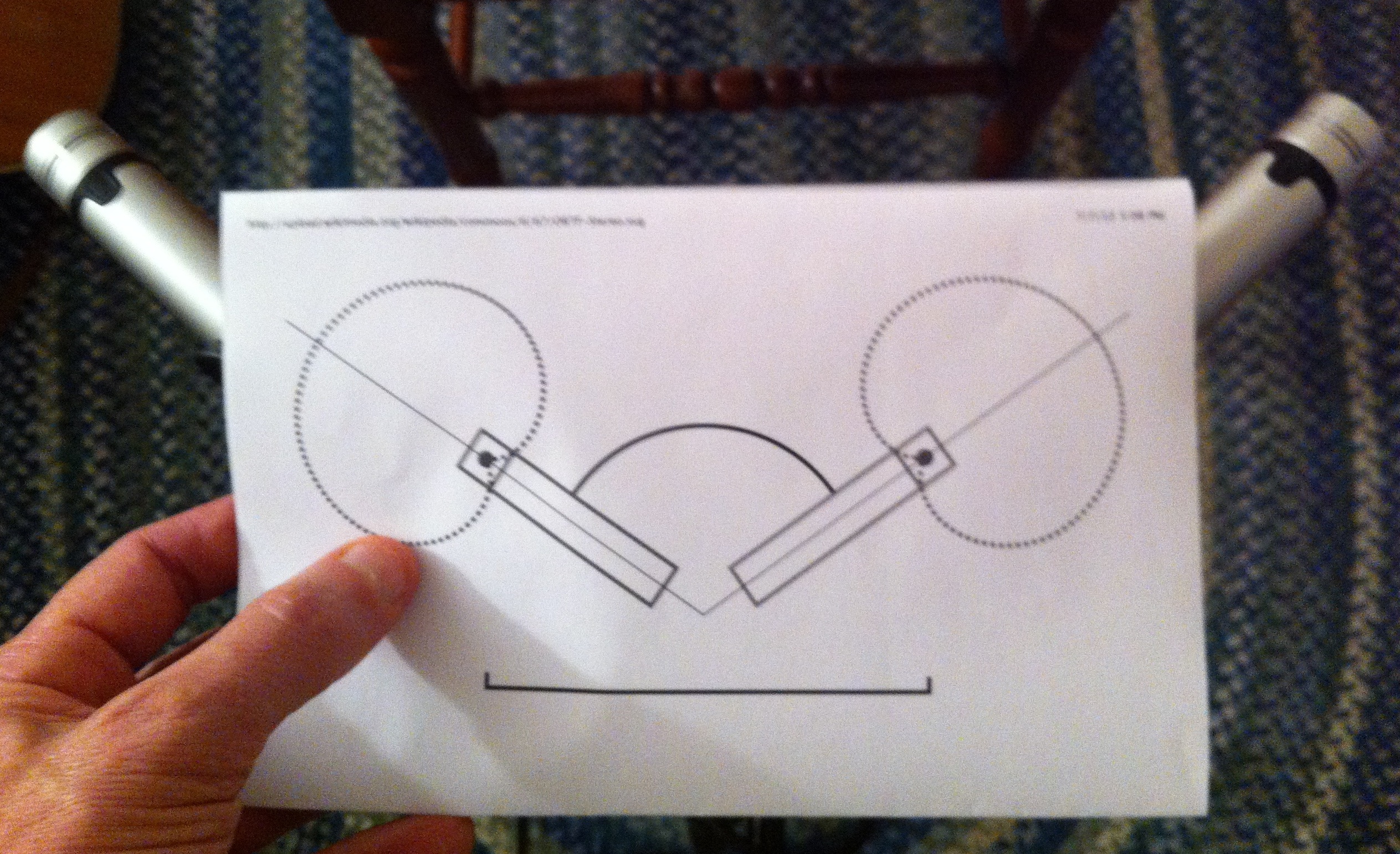
A quick trick. It’s not always easy to get your stereo mics spaced well. Here’s an easy way to get your measurements. Go to ORTF  Stereo Technique on Wikipedia. Click on the diagram on that page. Print it out. You can use it to easily align your microphones.

ORTF Microphone Spacing

Wikipedia also has pages for XY spacing and other configurations. Oh, and by the way, ORTF miking is great for acoustic guitar. Give it a try sometime.